Gas detection3
Respiratory protection4
Technical rescue9
Firefighting4
Safety & environment4
Personal protective equipment2
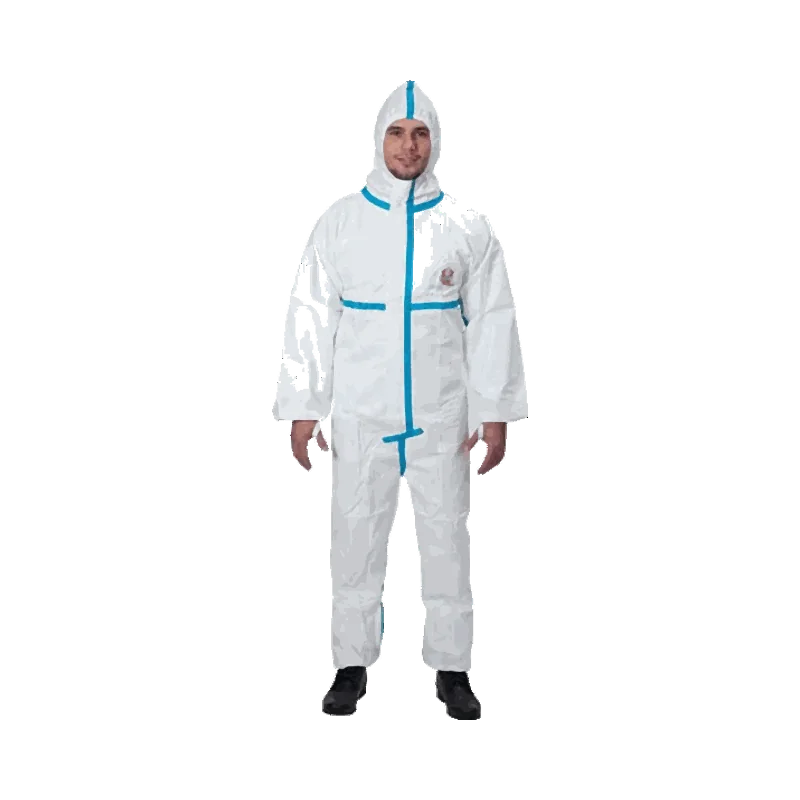
Protective and chemical-resistant coveralls (special suits)
Protective coveralls protect the rescuer against chemicals, dusts, liquids, and biological and radioactive agents while remaining breathable and comfortable. Made of materials resistant to various fluids and liquids, they protect against particle penetration while letting the skin breathe. Available in various protection classes (types 3/4/5/6) and in single-use and reusable versions.
Protective coveralls protect the rescuer against chemicals, dusts, liquids, and biological and radioactive agents while remaining breathable and comfortable. Made of materials resistant to various fluids and liquids, they protect against particle penetration while letting the skin breathe. Available in various protection classes (types 3/4/5/6) and in single-use and reusable versions.
Note: Select the protection type (3/4/5/6) and material to suit the type of chemical hazard. For the highest protection against gases, gas-tight suits (Type 1) are used — see the separate category.
Key features
- Protection against chemicals, dusts, liquids and biological agents.
- Materials resistant to liquids, limiting particle penetration.
- Breathability and working comfort.
- Protection classes (types 3/4/5/6 depending on the model).
- Single-use and reusable versions.
- Various sizes and colours.
Technical specification
| Parameter | Value |
|---|---|
| Type | protective / chemical-resistant coveralls (special suits) |
| Protection classes | Type 3 / 4 / 5 / 6 (depending on model) |
| Protection | chemicals, dusts, liquids, biological and radioactive agents |
| Material | resistant to liquids, limiting particle penetration |
| Construction | single-use or reusable |
| Sizes / colours | full range |
| Related | gas-tight Type 1 suits — separate category |
Applications
Chemical rescue (HAZMAT), chemical and pharmaceutical industry, sanitary services, work with hazardous substances.
Frequently asked questions (FAQ)
How do coverall types (3/4/5/6) differ?
They are tightness classes: Type 3 — liquids under pressure, Type 4 — sprayed liquids, Type 5 — particles, Type 6 — limited contact with liquid. The highest protection against gases is provided by Type 1 (gas-tight).
Single-use or reusable?
Depending on the application — we will select the version to suit the type and frequency of hazards.
Brand and service
SafeTech — distributor of personal protective equipment for the fire service and rescue services: selection, delivery and technical support (Suchy Dwór near Gdynia), nationwide support.
Why SafeTech
Availability and service — Gdynia and the Tricity
Protective and chemical-resistant coveralls (special suits) — sales, selection, calibration and service in Gdynia (Suchy Dwór, on the border of Gdynia and the Kosakowo municipality). We serve the Tricity (Gdańsk, Sopot, Gdynia), Rumia, Reda, Wejherowo, the Pomeranian Voivodeship and all of Poland. Ask about an offer and availability.
Related products
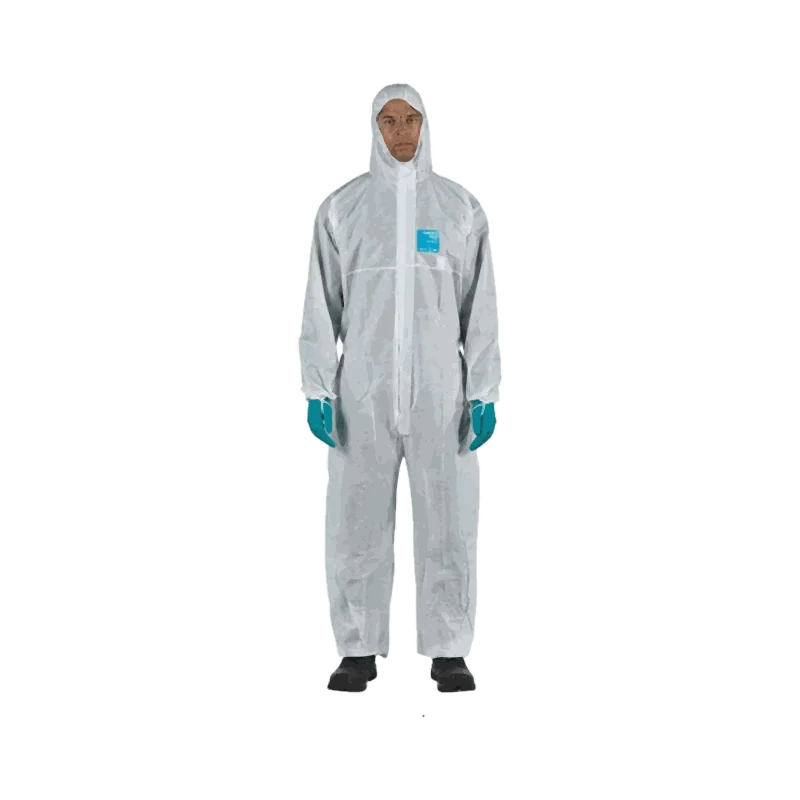
Ansell AlphaTec™ 1500 PLUS (Model 111)
Type 5/6 protective coverall (breathable SMS)
View →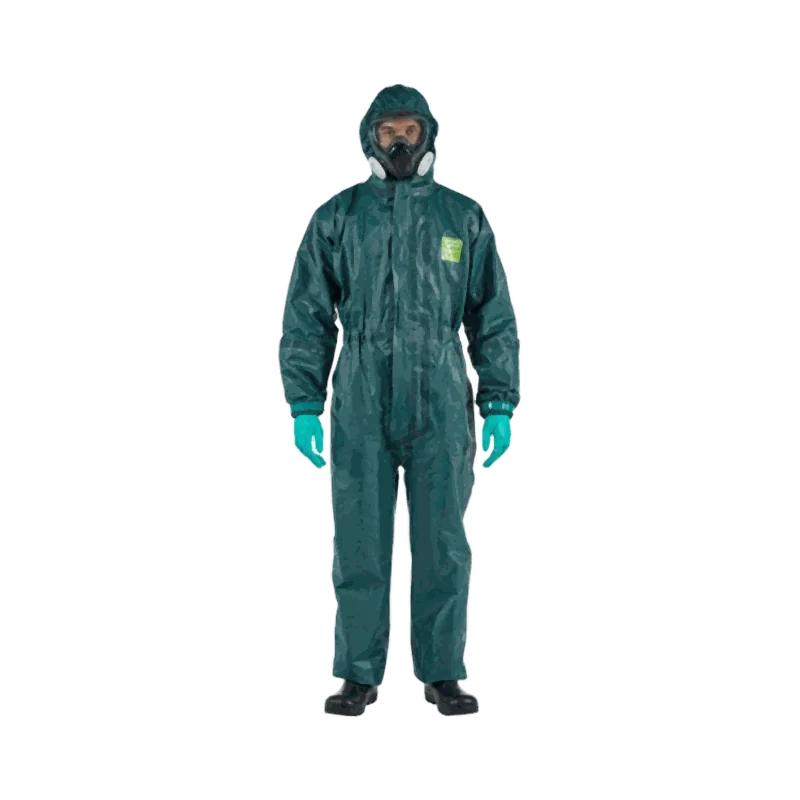
Ansell AlphaTec™ 4000 (Model 111)
type 3/4/5 chemical protective suit
View →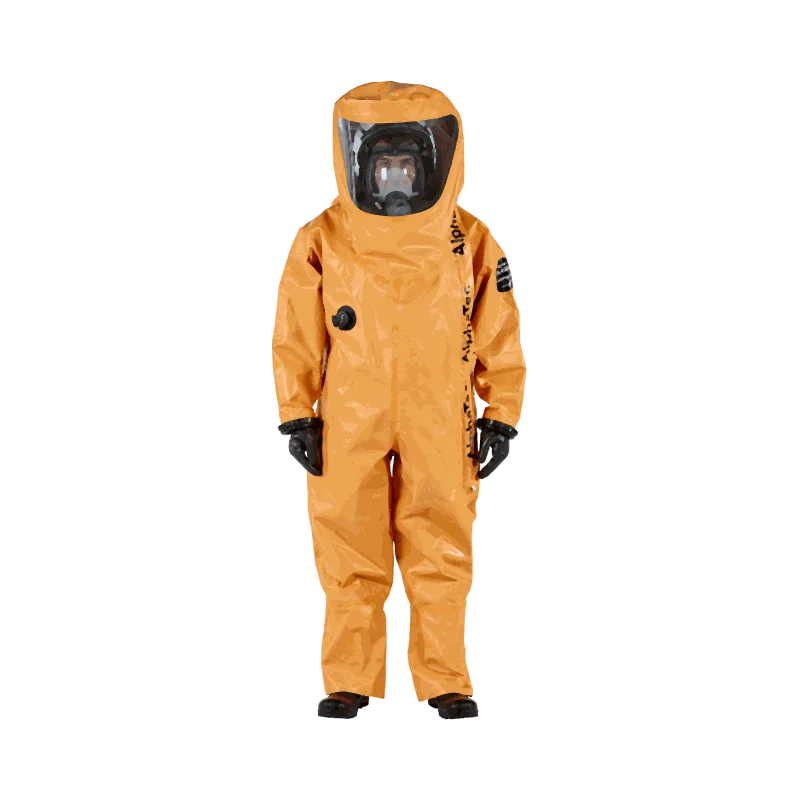
Ansell AlphaTec FLASH type CV/VP1
Type 1 / Level A gas-tight protective suit
View →